Resize an image to 200 KB
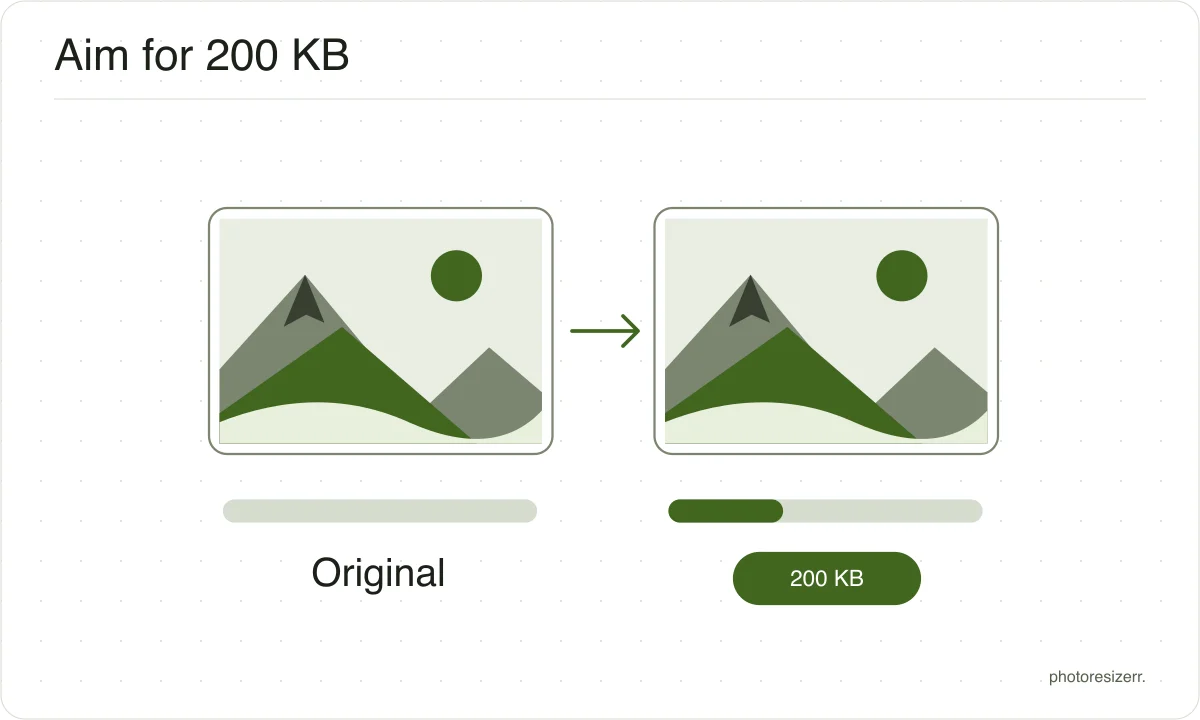
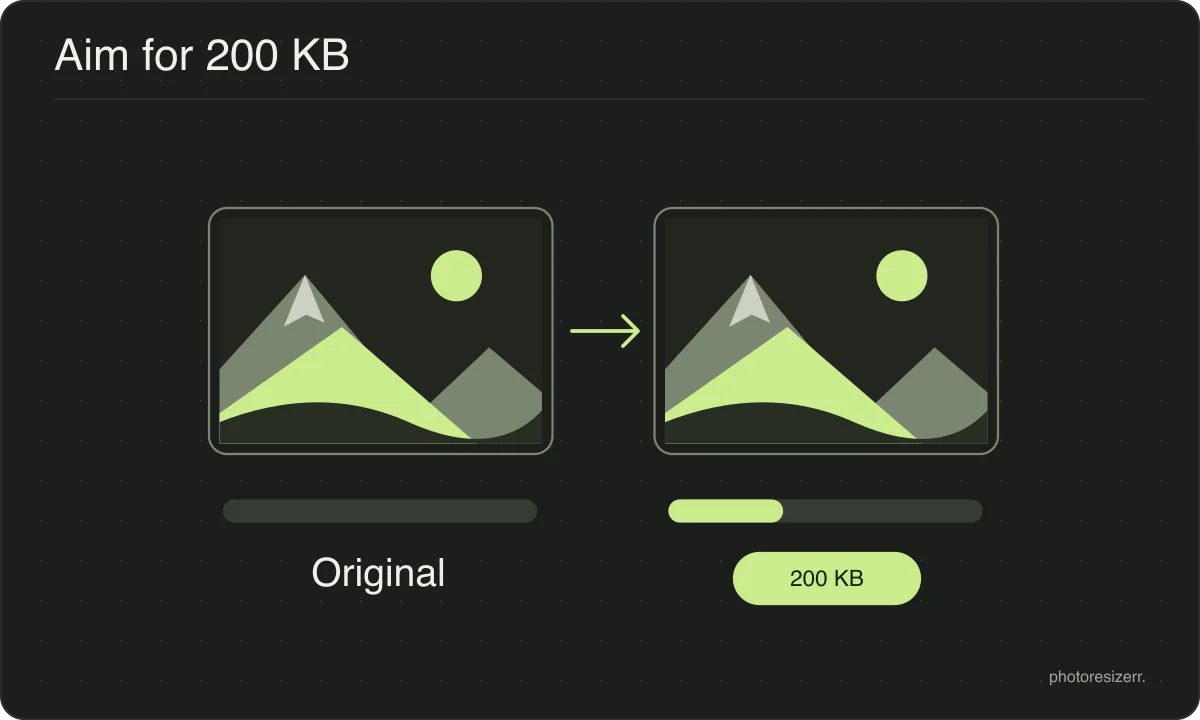
Compress a photo toward a 200 KB file size online for free. The tool adjusts quality at your chosen dimensions and shows the resulting size. Preview faces, text and fine details before downloading. If the image remains too large, reduce the width. Processing stays in your browser without signup.
Your workspace FILE SIZE · PREVIEW · DOWNLOADPrivate by default
Finds the highest quality that fits the target at these dimensions.
Processed on your deviceNo watermark. No signup.
What to expect at this size
These are measured figures, not estimates. Five photographs were run through this page's own engine and the results written down.
The range is what varies between an easy photograph and a hard one: a flower against a blurred background compresses far better than a street full of signage.
- File size produced
- 193.1 KB to 199.9 KB
- Quality it settles on
- 50 to 82
- Photos that hit the target
- 5 of 5
- Photographs used
- 5
- Measured on
Why do forms ask for this size?
A 200 KB target gives a photo more room than 50 KB or 100 KB, but it does not guarantee a particular level of quality.
A small portrait and a detailed landscape need different amounts of data. Use the preview to decide whether the result suits your purpose.
What is the difference between resizing and compression?
The main difference between resizing and compression is the measurement you change. Resizing changes width and height in pixels. Compression reduces file size in bytes.
A photo can have the correct dimensions and still exceed an upload limit, so check both requirements.
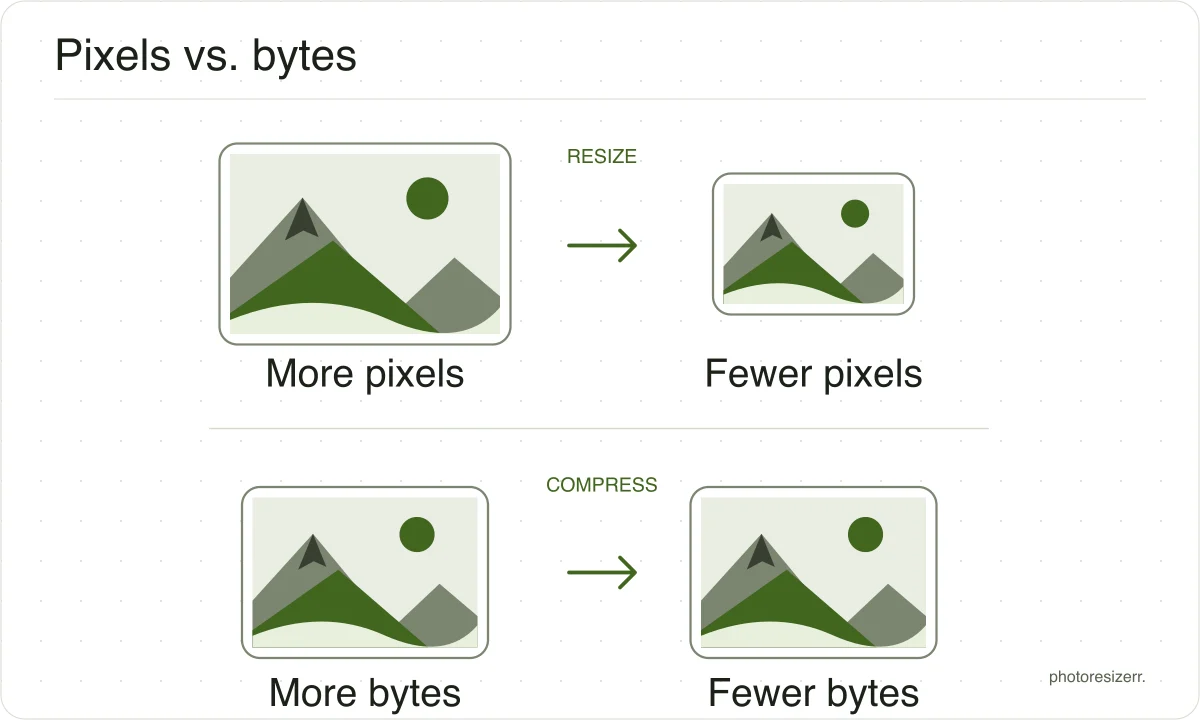
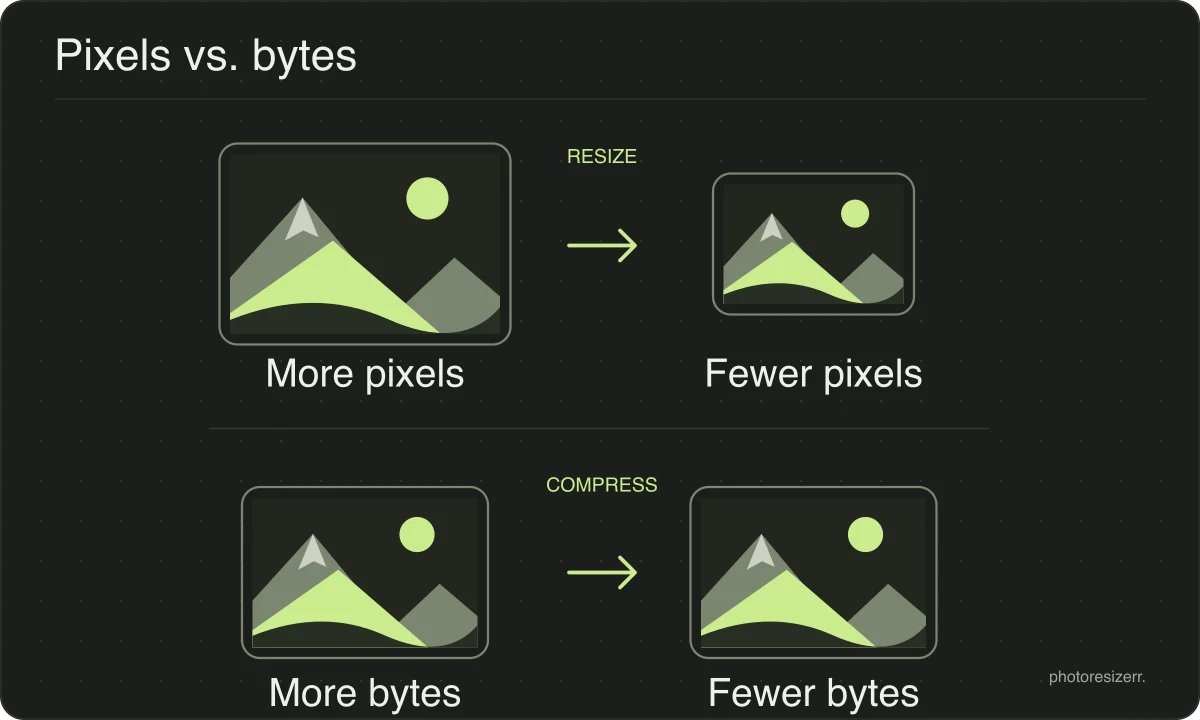
If you need both, set the dimensions first and then adjust quality or the file size target. Work from the original and download once to avoid repeatedly recompressing a saved JPEG.
What happens to your photo?
Your selected photo is processed in your browser, without an image upload to a server. The page may download code and codecs needed for editing.
Save your result before closing the tab; unsaved edits are kept in memory rather than in an online account.
Common questions
Do I lose much quality at 200 KB?
The amount of visible loss depends on the photo’s dimensions and detail. Compare the preview at your intended viewing size.
If 200 KB causes distracting artifacts, reduce dimensions when allowed, or try another accepted output format.
Should I use WebP to get better quality at this size?
Try WebP if your destination accepts it, then compare the preview and final file size. It may offer a useful tradeoff for your image.
If a form asks for JPEG, save JPEG; changing the extension of a WebP file will not convert it.
Last updated: