Resize an image to 300 x 300
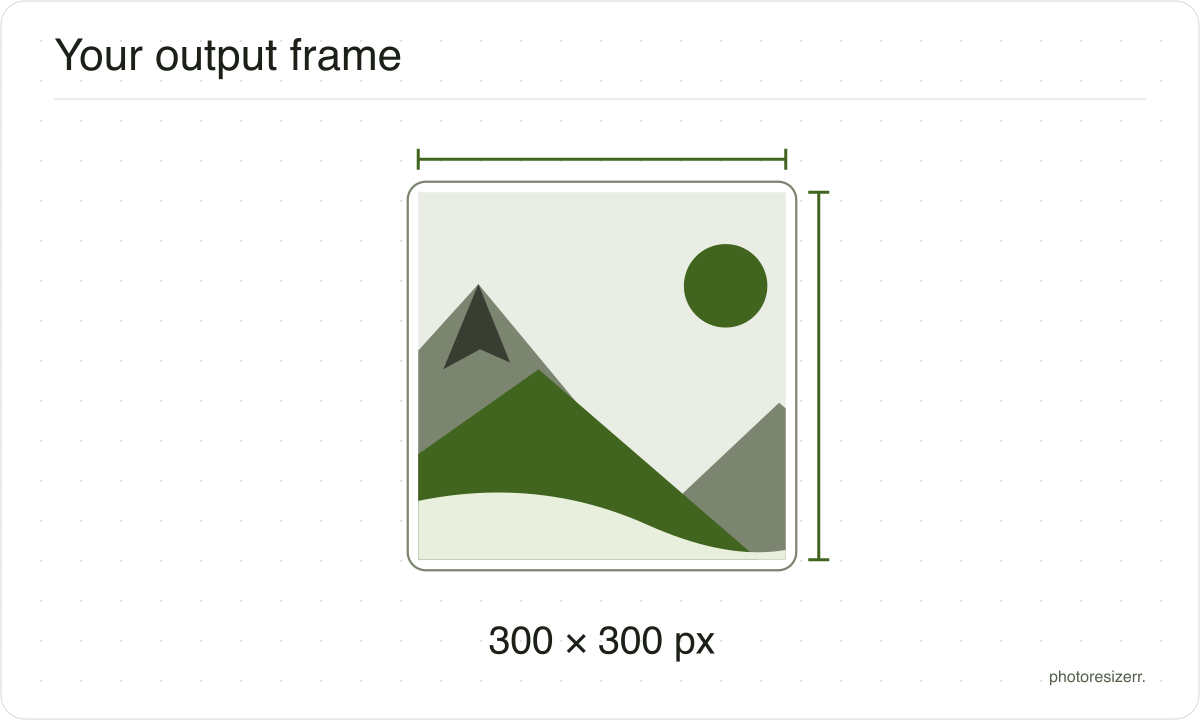
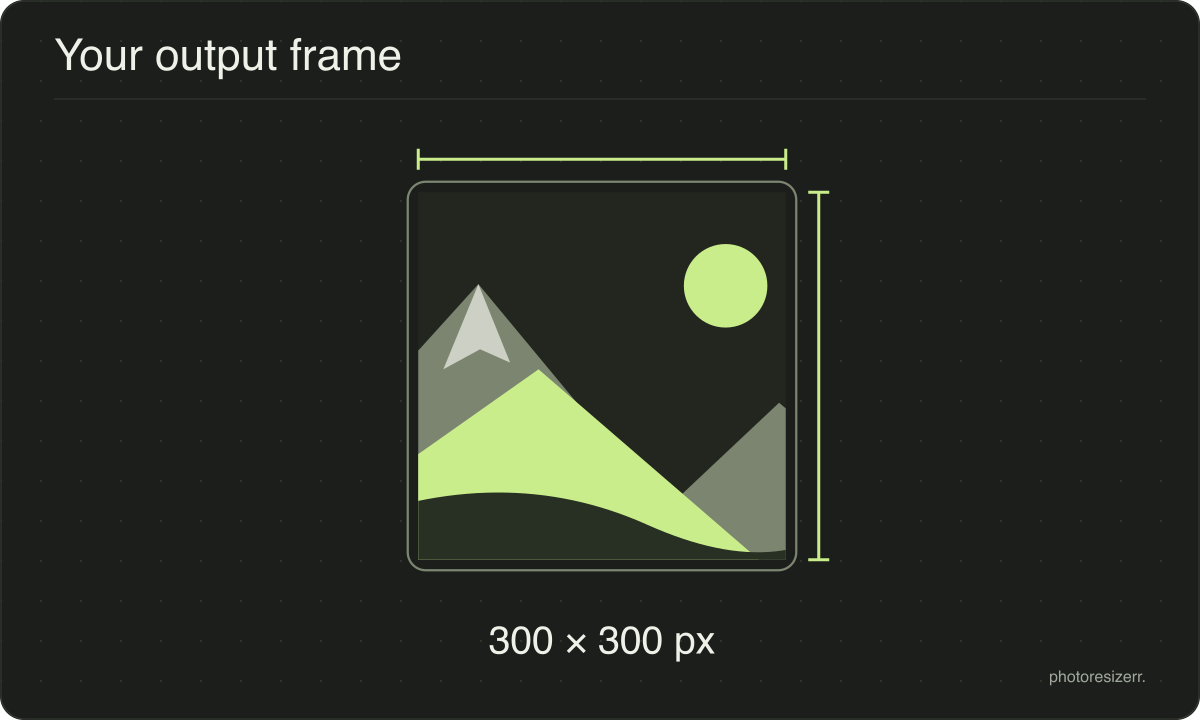
Drop a photo and it comes out exactly 300 pixels by 300, a small square for a thumbnail or an avatar.
Jump to the toolYour workspace Pixels · Preview · DownloadPrivate by default
Runs on this device. The first use downloads a 56 to 135 MB model once. Nothing is uploaded.
- Open a photoDrop, paste or choose one.
- Set the sizeType it, or pick a common size.
- DownloadSee the file size before you save.
Processed on your deviceNo watermark. No signup.
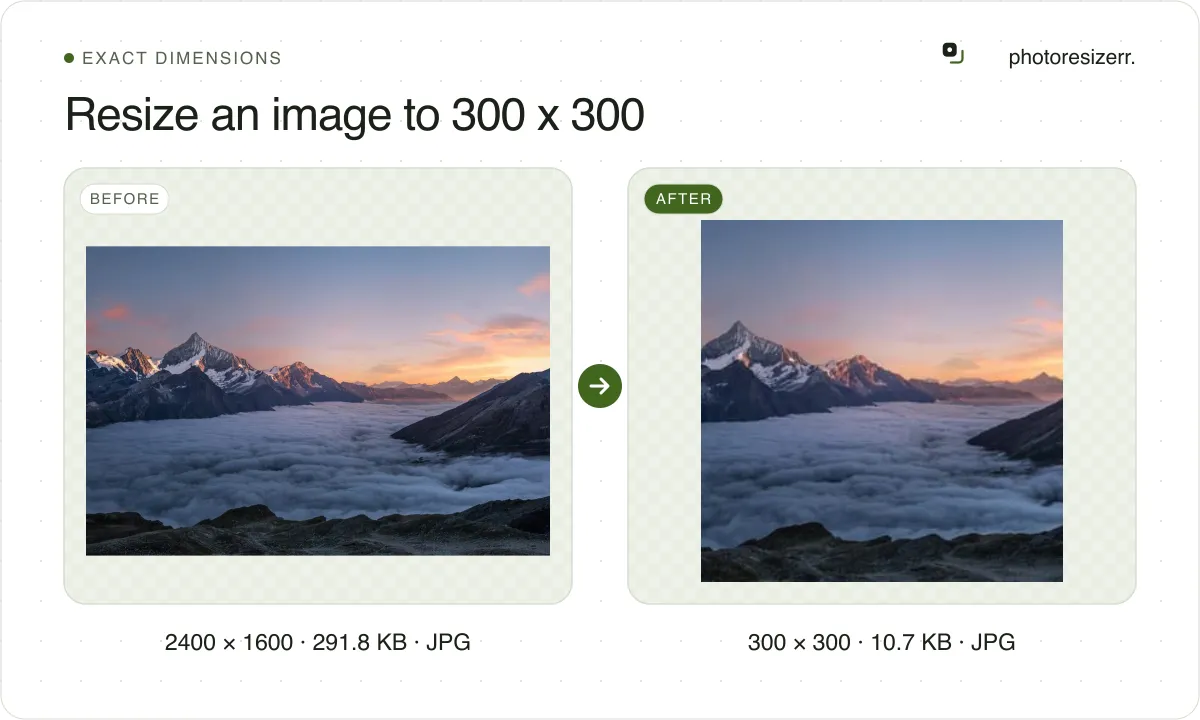
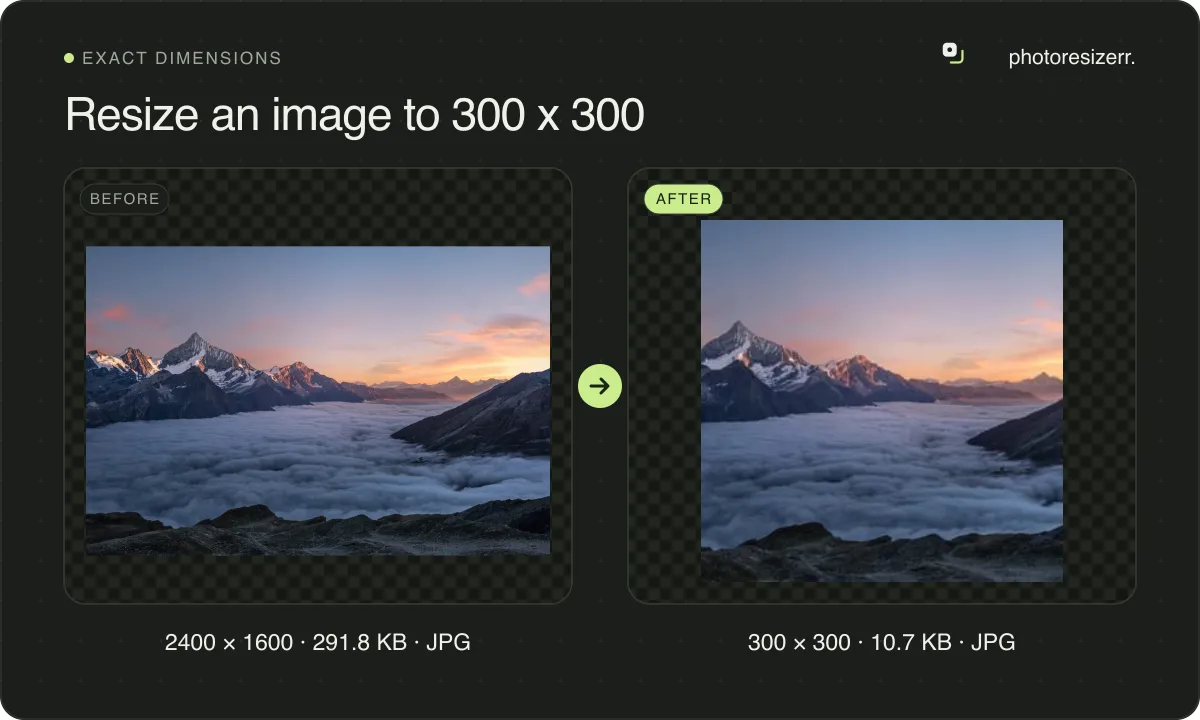
A 4032 by 3024 phone photo is scaled down to 400 by 300, then 50 pixels come off each side. That is less than 1 percent of the original pixels. Nothing is uploaded.
Why this size?
300 by 300 is a small square that shop themes, forums and sign-up forms often ask for as a thumbnail or profile picture. It is 90,000 pixels, less than a tenth of a 1000 square.
That is too few to crop or enlarge again later, so keep your full size original and make a new 300 square from it when you need one.
Were you asked for 300 DPI rather than 300 pixels? That is a different setting, changed without touching the pixels, with Change image DPI.
What gets cropped, and why nothing is stretched
A photograph is almost never the shape you are asking for.
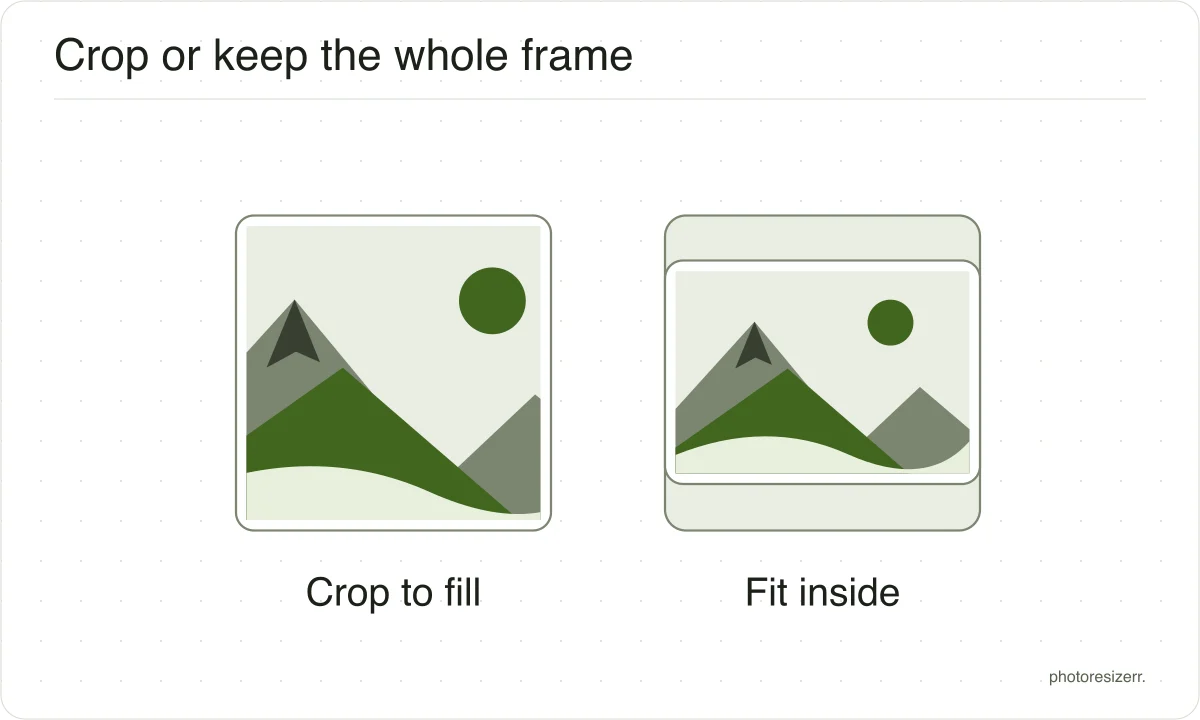
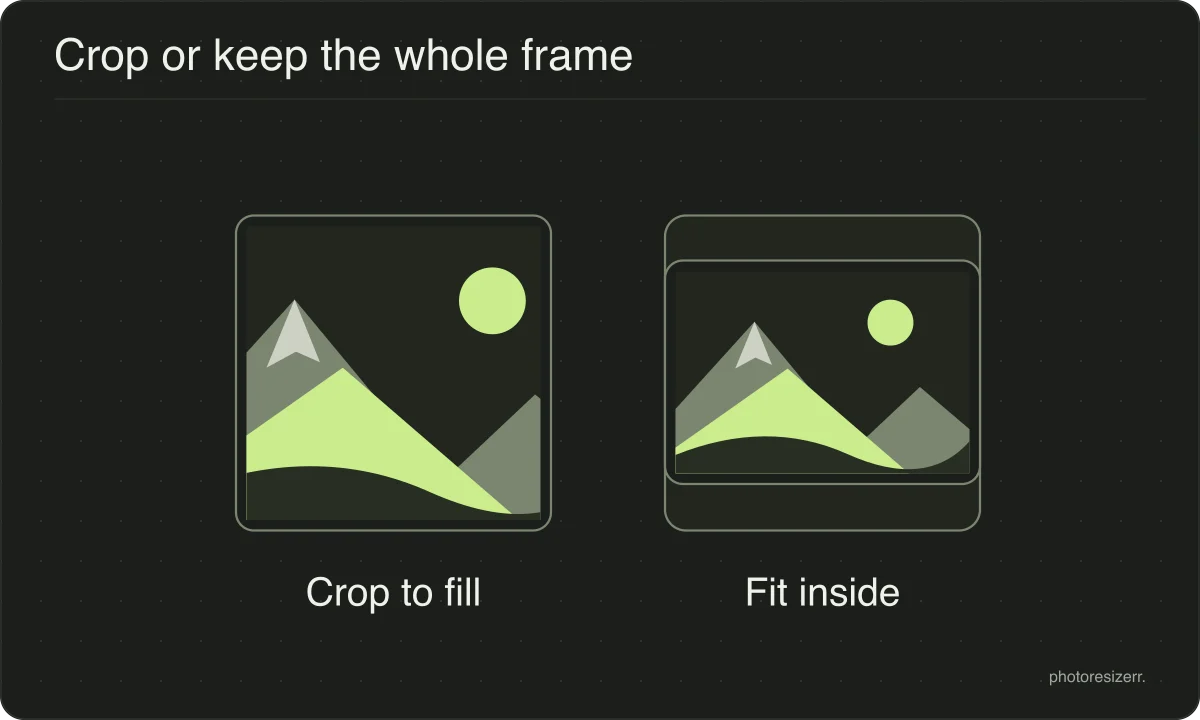
The image is scaled until it fills the box and the overflow is then taken off the long edges, evenly from both sides.
The alternative is stretching, which leaves faces and straight lines visibly wrong, so this tool never does it.
If the crop takes something you wanted to keep, change the width or the height in the panel and the box changes with it.
Turning the lock back on makes both fields follow your photo's own proportions again, which gives you the whole frame at a smaller size instead.
What if the photo is smaller than the box?
It is scaled up to fill it, because a page that promises an exact size has to deliver one.
Enlarging cannot add detail that was never captured, so the result is softer than the original.
Starting from the largest copy you have is always worth the extra second it takes to find it.
What happens to your photo?
Your selected photo is processed in your browser, without an image upload to a server. The page may download code and codecs needed for editing.
Save your result before closing the tab; unsaved edits are kept in memory rather than in an online account.
Common questions
How much of my photo is cut off?
A 4032 by 3024 phone photo is scaled to 400 by 300, then 50 pixels come off each side. Three quarters of the width survives.
A 6000 by 4000 camera photo is scaled to 450 by 300 and loses 75 from each side, keeping two thirds. A 3024 by 4032 portrait loses 50 from the top and 50 from the bottom.
Can I keep the whole photo in the square?
Yes. Once your photo is open, choose White border under Fill the box. The whole photo is scaled to 300 on its long side and white fills the rest.
A 4032 by 3024 photo becomes 300 by 225, with a 37 pixel band above and a 38 pixel band below.
How big is a 300 by 300 file?
Our five test photos came out between 20 KB and 28 KB as JPEGs at the tool's default quality of 82. The smallest was a sunflower on a soft background, the largest a street full of signs.
That is a quarter to a third of what the same photos weigh at 800 by 600, which has more than five times the pixels.
Is 300 x 300 the same as 300 DPI?
No. 300 by 300 is the number of pixels in the image. DPI is a separate number in the file that tells a printer how many of those pixels to fit into each inch.
A 300 pixel square prints 1 inch wide at 300 DPI and 4.17 inches wide at 72 DPI, with the same pixels either way.
Last updated: