Convert WebP to JPG
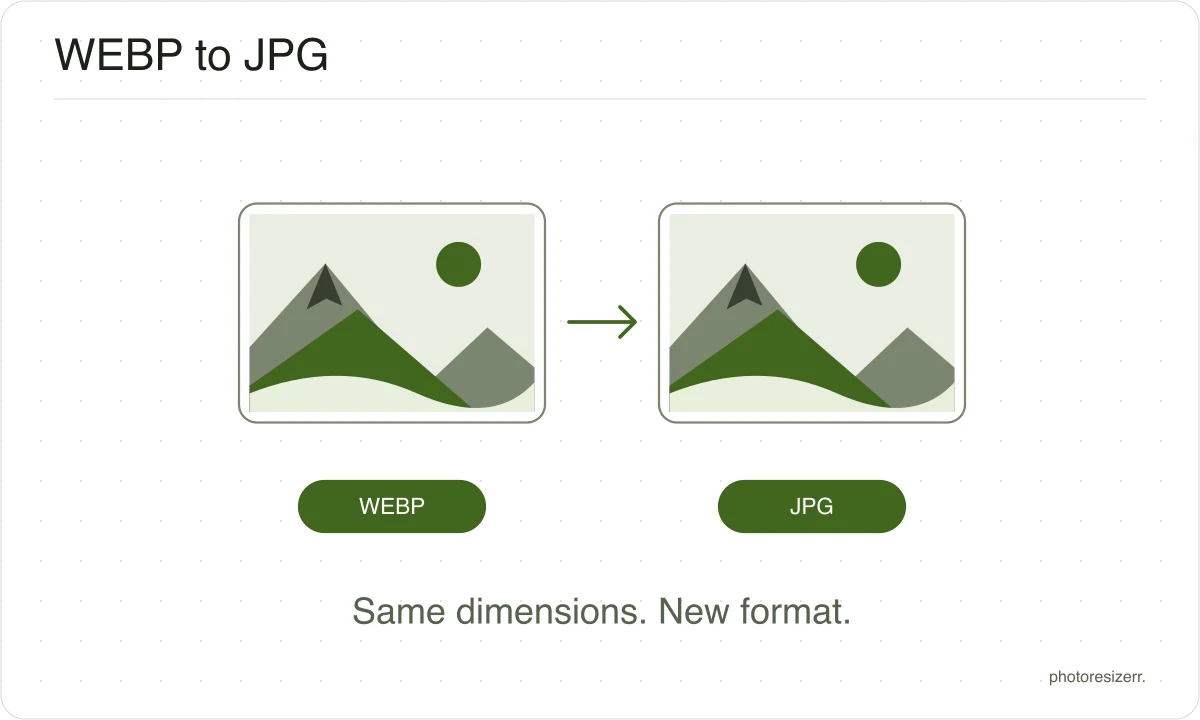
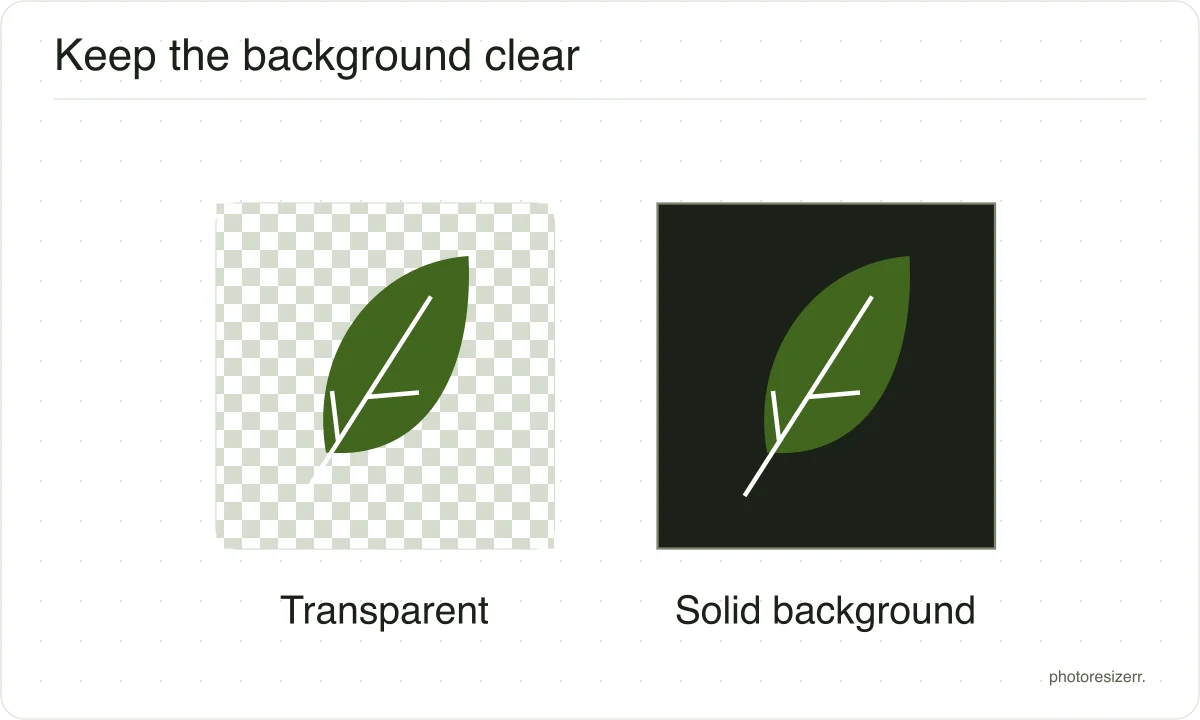
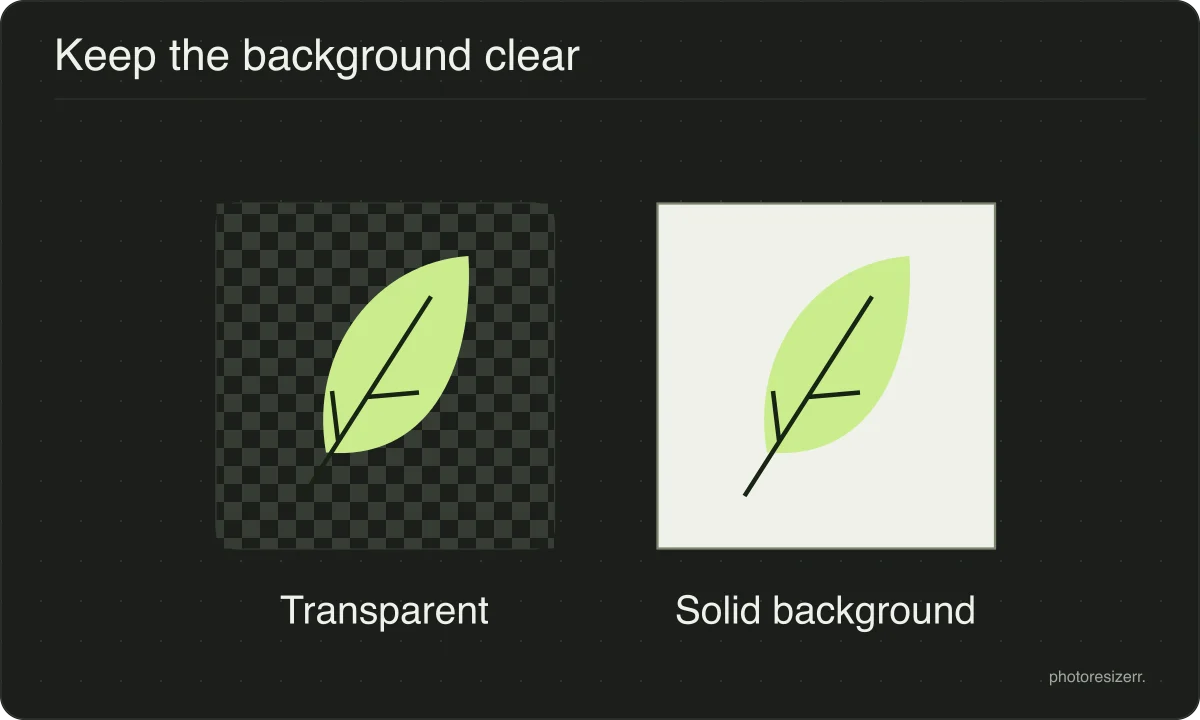
Drop a WebP and download it as a JPG, converted in your browser. This is the conversion to make when something will not open a WebP: older software, a printing service, or an upload form. Any transparency is filled with white. Nothing is uploaded and no account is needed.
Your workspace CONVERT · PREVIEW · DOWNLOADPrivate by default
This browser did not name the format it opened.
Processed on your deviceNo watermark. No signup.
Why make this conversion?
WebP is a web format, and a good deal of software that is not a browser still refuses it: photo editors a few versions old, printing services, and plenty of upload forms.
Converting to JPEG is the reliable way out, and it costs a little quality that is rarely visible.
A conversion never improves a picture
Changing the format changes how the pixels are stored, not what they show. Detail an earlier save discarded is gone, and no later format can work out what used to be there.
If the original file still exists, convert from that instead.
Where it does matter is the order of the work. Resize and crop first, convert last.
Every save to a lossy format costs a little quality, so the fewer round trips a file makes, the better it looks when you are finished.
What happens to your photo?
Your selected photo is processed in your browser, without an image upload to a server. The page may download code and codecs needed for editing.
Save your result before closing the tab; unsaved edits are kept in memory rather than in an online account.
Common questions
Why will my software not open a WebP?
Because support outside browsers arrived late.
Operating systems and photo editors added it years after the format appeared, so anything that has not been updated recently does not recognise the file at all.
Converting to JPEG sidesteps that entirely.
Does converting back to JPG restore the original quality?
No. Each lossy format discards detail of its own, so a WebP saved as JPEG has been through two rounds of compression.
The result is usually still fine to look at, but it is never better than the WebP it came from.
Last updated: