LinkedIn post image size
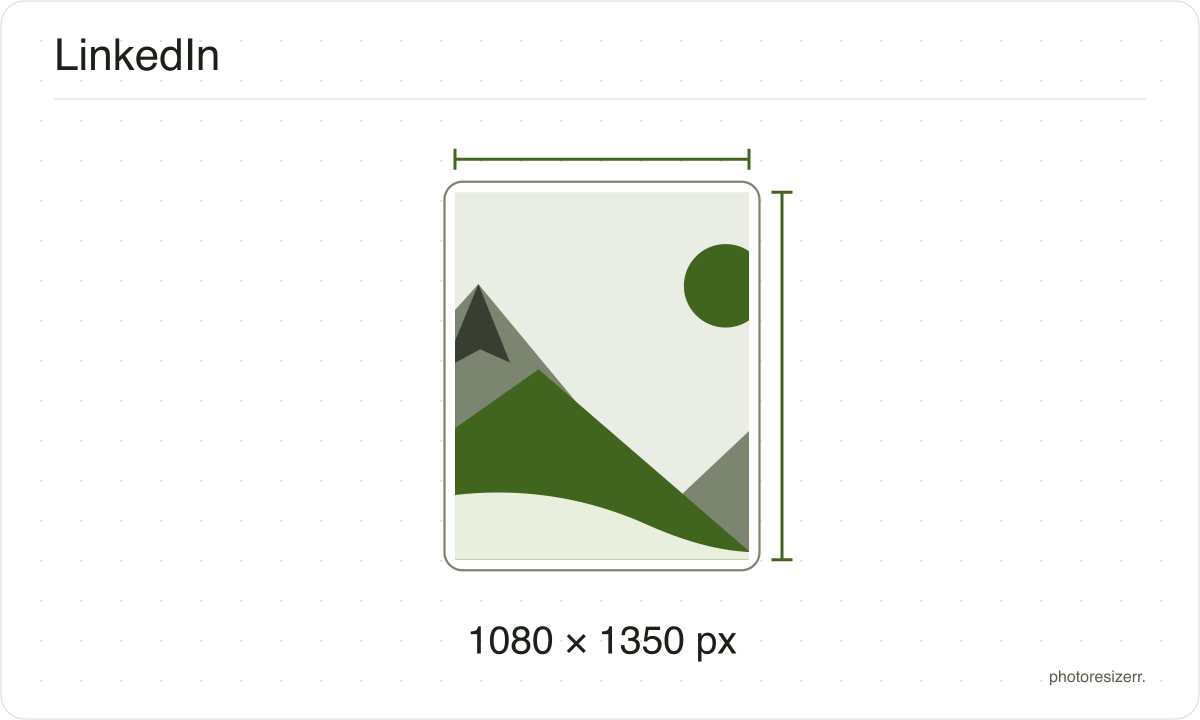
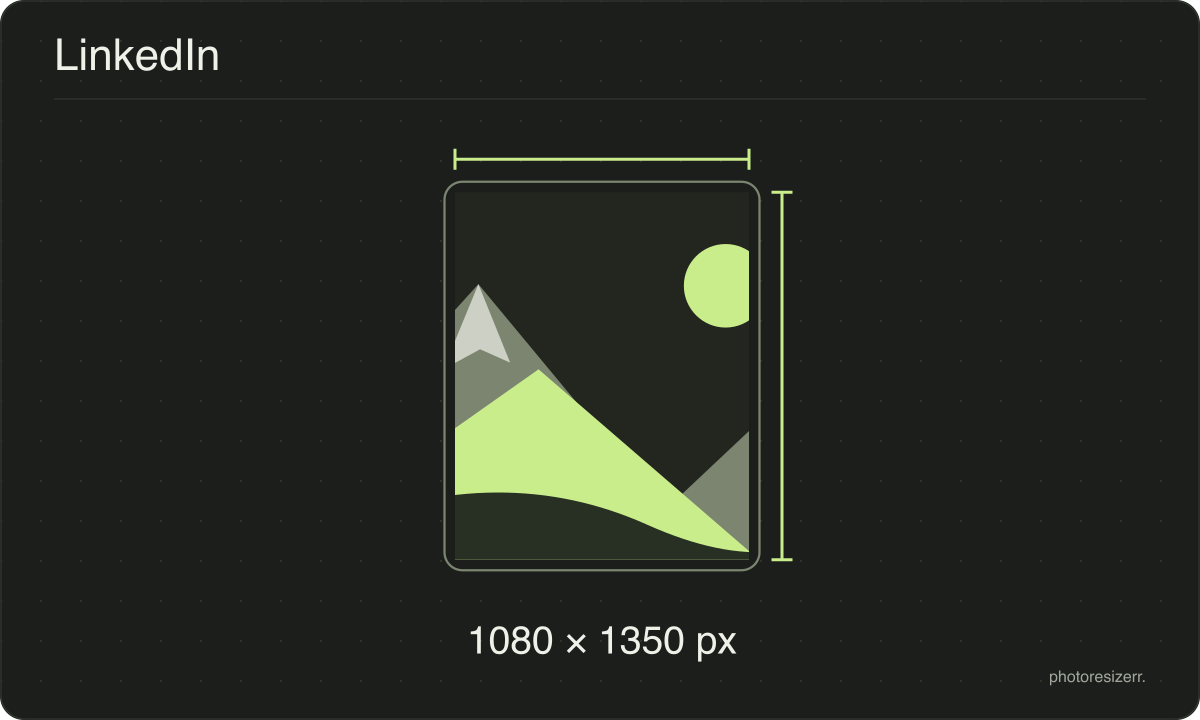
LinkedIn recommends a photo 1080 pixels wide, anywhere from 3:1 to 4:5, so the tallest that shows uncropped is 1080 by 1350.
Jump to the toolYour workspace Pixels · Preview · DownloadPrivate by default
Runs on this device. The first use downloads a 56 to 135 MB model once. Nothing is uploaded.
- Open a photoDrop, paste or choose one.
- Set the sizeType it, or pick a common size.
- DownloadSee the file size before you save.
Processed on your deviceNo watermark. No signup.
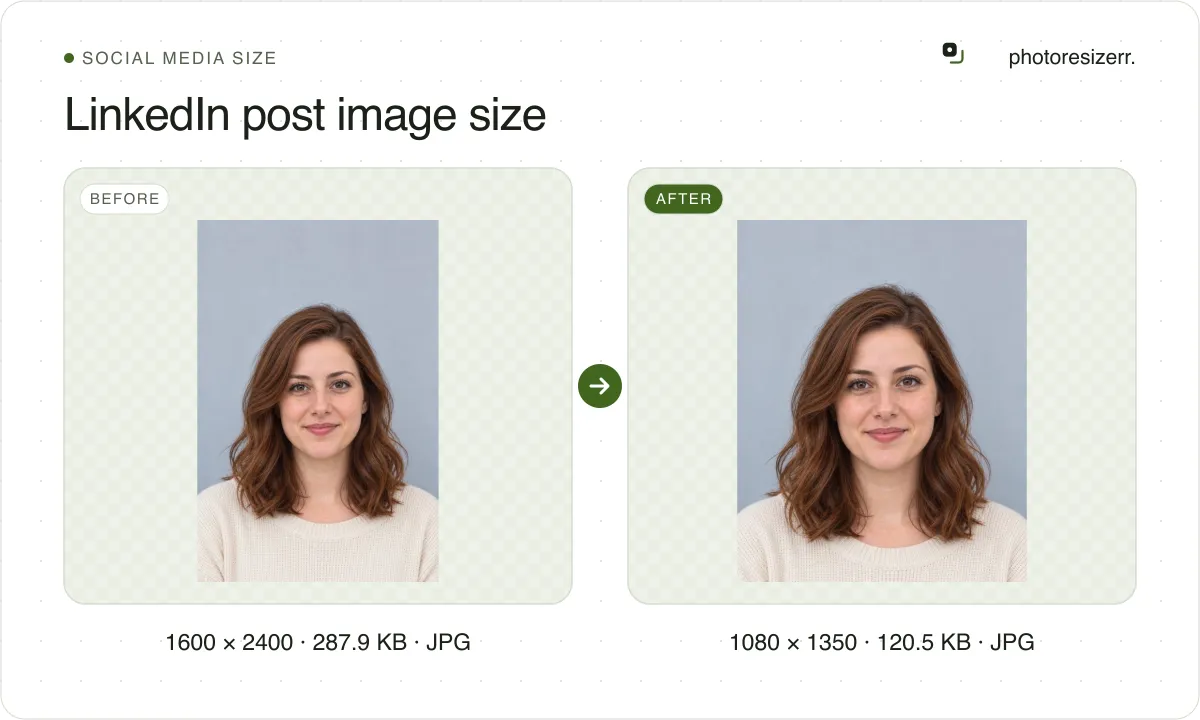
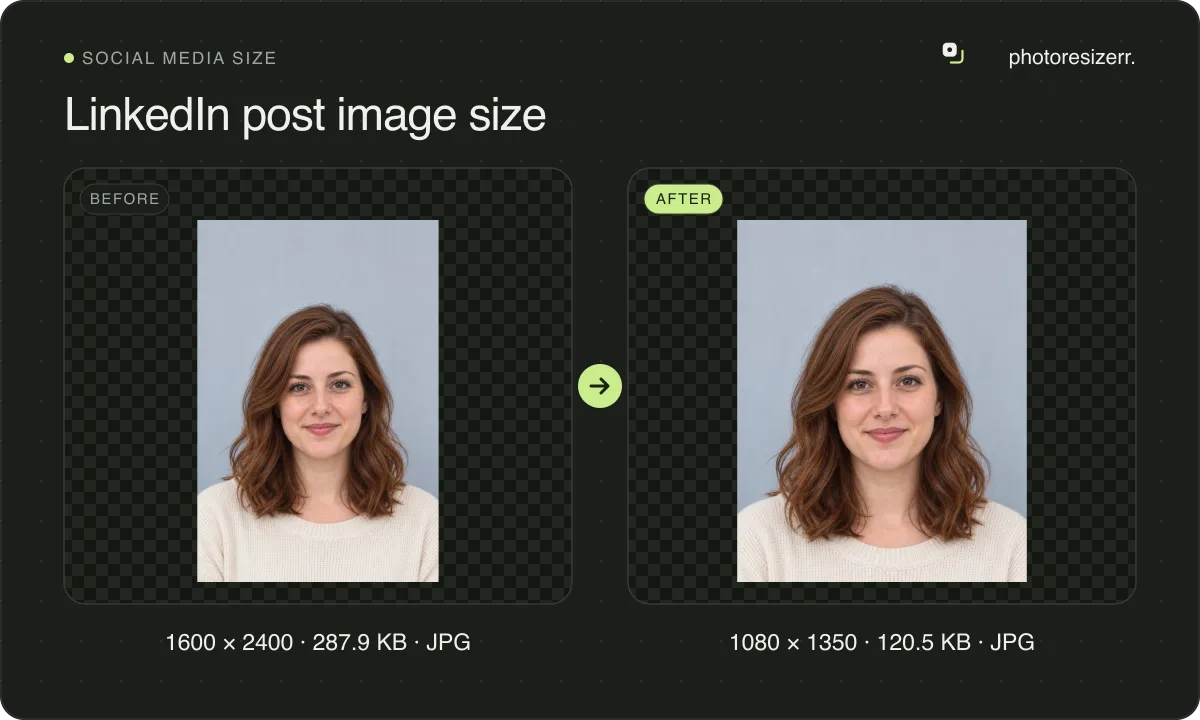
The 1200 by 627 in most guides is for a post with a link. Drop a photo here and it comes out at 1080 by 1350, cropped from the centre.
What the platform recommends
Portrait
- Recommended size
- 1080 x 1350
- File types
- JPEG
- Maximum file size
- 5 MB
- Source
- www.linkedin.com
- Read at the source on
Square
- Size this tool makes
- 1080 x 1080
- File types
- JPEG
- Maximum file size
- 5 MB
- Source
- www.linkedin.com
- Read at the source on
Link
- Recommended size
- 1200 x 627
- File types
- JPEG
- Maximum file size
- No limit published
- Source
- www.linkedin.com
- Read at the source on
Why this size?
LinkedIn centres and crops a photo taller than 4:5 itself, and a posted photo cannot be resized or edited afterwards. Cropping it here first lets you choose what stays.
A phone portrait is 3:4, only a little taller than 4:5, so it loses a thin strip. A 9:16 screenshot loses far more.
Refreshing your profile banner as well? LinkedIn banner size.
These numbers move, so check the date
A passport size has been the same for decades.
A platform's recommended image size can change in a product update nobody announces, which is why every size here shows the date somebody read it at the platform's own help page rather than presenting it as timeless.
If that date looks old and the size matters to you, the link beside it goes straight to the page it came from.
That is one click to confirm, against the alternative of trusting a number copied between blog posts since 2019.
Why your photo gets cropped
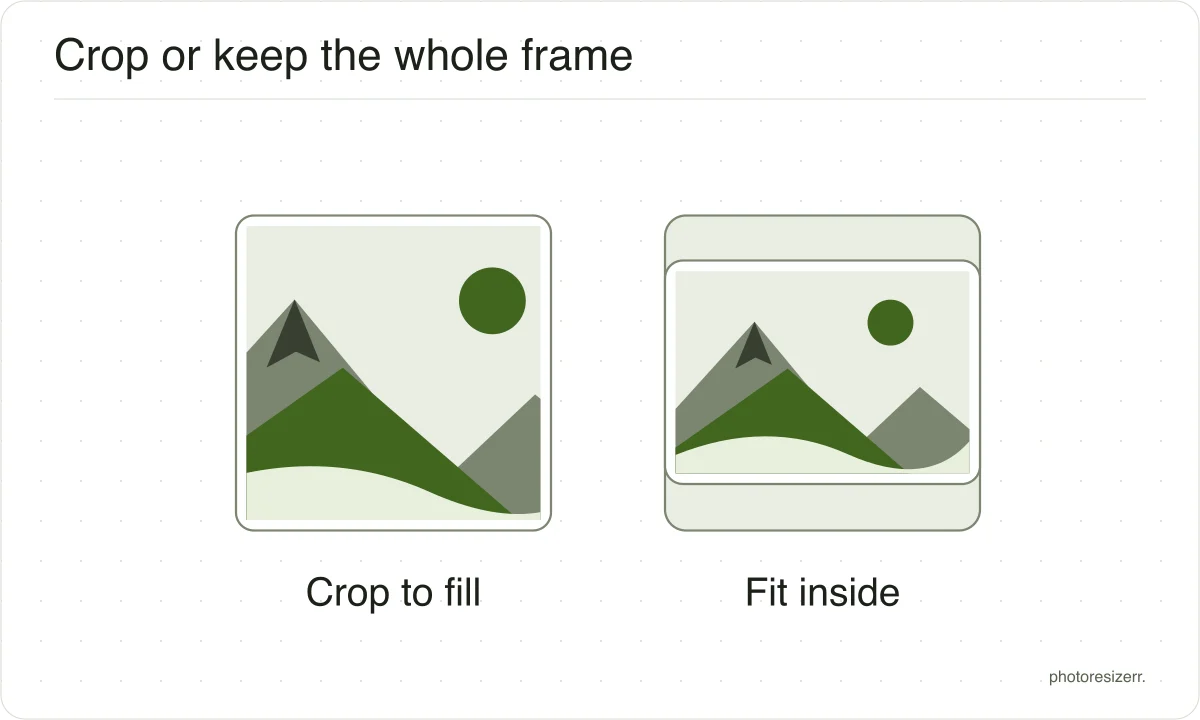
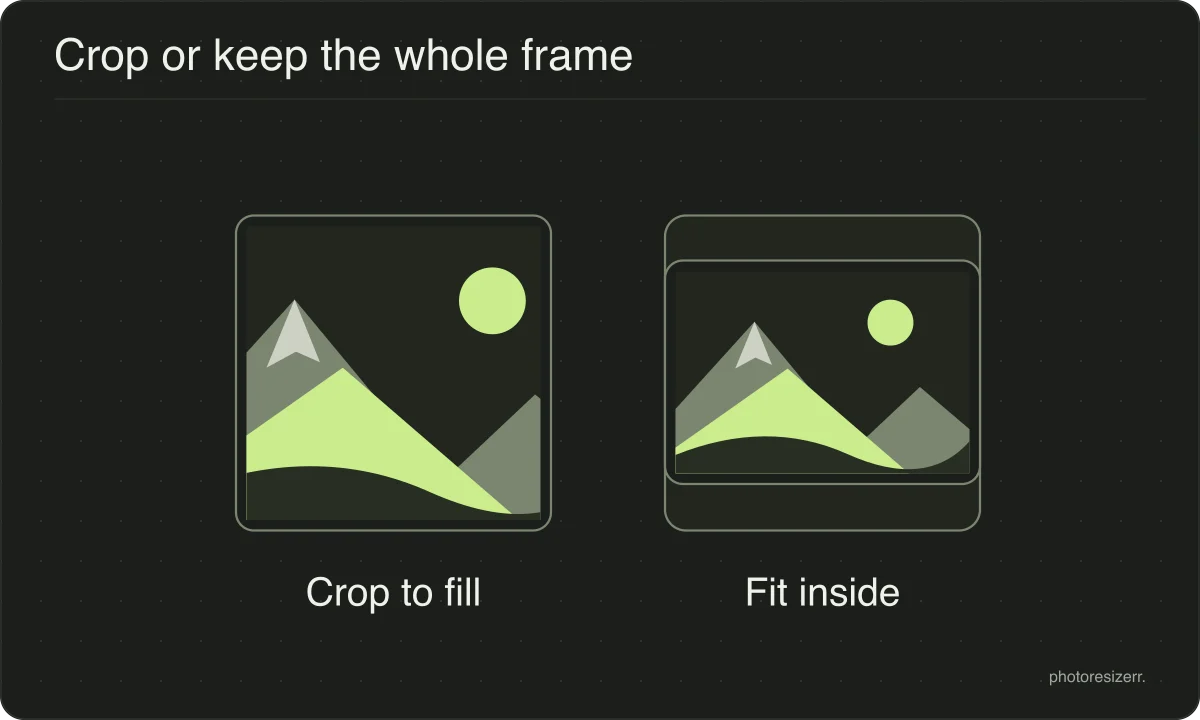
Platform sizes are shapes as much as sizes, and a photograph is rarely already that shape.
The box is filled and the overflow comes off the long edges evenly, because the alternative is stretching the picture and a stretched face is the one result nobody wants.
If the centre is not the part you want to keep, open the crop tool, drag the frame to the right region, and come back. The crop stays applied while you set the size.
What happens to your photo?
Your selected photo is processed in your browser, without an image upload to a server. The page may download code and codecs needed for editing.
Save your result before closing the tab; unsaved edits are kept in memory rather than in an online account.
Common questions
What size is a LinkedIn post image?
LinkedIn's help says a photo must be at least 552 by 276 pixels, and recommends 1080 pixels wide. Any shape from 3:1 to 4:5 is accepted.
At 1080 wide that is anything from 1080 by 360 to 1080 by 1350. Portrait here makes the tall end, and Square a 1080 by 1080 from inside the range.
Is 1200 by 627 the right size for a photo post?
Not for a photo on its own. LinkedIn gives 1200 by 627, a 1.91:1 shape, for a custom image on a post that shares a link.
For a post with only an image, or an image and text, LinkedIn says the image is enlarged to fit the feed. Use Portrait or Square for those.
Why did LinkedIn crop my photo?
It was taller than 4:5. LinkedIn's help says a photo beyond that ratio is centred and cropped to fit, and a posted photo cannot be resized or edited afterwards.
A 9:16 phone screenshot at 1080 wide loses 285 rows from the top and from the bottom. Crop it here first and you choose which rows go.
What file size and formats does LinkedIn accept?
Up to 5 MB per photo and 36 megapixels. LinkedIn lists JPEG, PNG, GIF and WEBP on desktop, iPhone and Android, and HEIC on iPhone only.
A post can carry up to 20 photos. This tool saves a JPG, well under the 5 MB limit at these sizes.
How much of my photo is cropped?
A 3024 by 4032 phone portrait is scaled to 1080 by 1440 and loses 45 rows from the top and from the bottom as Portrait, or 180 each as Square.
A 4032 by 3024 landscape keeps its middle 1080 of 1800 columns as Portrait. As a Link image it keeps 627 of 900 rows.
Last updated: